Categories
Economics Infrastructure Policy

Infrastructure Complexity

complex-infrastructure.png

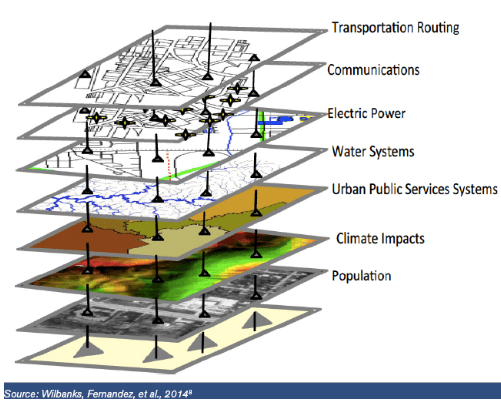
Why does delivering infrastructure have to be so complex on so many different levels? It seems hard to correctly identify infrastructure, assess the need for services from those assets, discern which infrastructure to maintain, rehabilitate, replace or build new. Further, there are strong disagreements at the political level, between infrastructure agencies and, within infrastructure agencies, between different asset managers.

Complexity arises from the involvement of a broad array of participants in the provision of infrastructure assets, as well as the managers of the services provided from those assets.

It also arises from complex streams of benefits. In addition to benefits accruing to consumers of infrastructure services, there are often significant streams of benefits that are positive externalities. Wider benefits to society from improved health services, better access to education, cleaner water supplies, stable supply of electricity, and improvements to travel time and quality of the trip. A healthier workforce improves productivity. A more educated populace can generate higher disposable incomes. Purer water supplies enhance public health. Stable electricity supplies reduce business interruptions. Improved transport systems make labour markets function better and increase intra and inter city productivity. The benefits are multifaceted and often hard to quantify on cost-benefit analyses.

On the supply side, it is often too easy to overlook the range of solutions that are on offer. After a need has been identified, solutions could well include non-built options. This may involve active demand management, improving utilization and output of existing assets, repairing and rehabilitating existing infrastructure, changing the infrastructure asset operating environment to foster demand for alternatives.

The options analysis needs to be undertaken at the output/outcome level, rather than at the input/resource level. That is where actual economic value can be identified. To do otherwise creates the risk of estimating the cost of sub-optimal options.

Complexity also arises in terms of finding the financial resources to commission and operate infrastructure assets. Also, implementation through procurement and construction may have complexity.

Large, nationally significant infrastructure contains a lot of first pass risks. Getting the right scale and scope of infrastructure to match the most likely demand profile requires a lot of analysis.

Many infrastructure assets contain hiding optionality benefits. The ability to set the ultimate scale and scope, as well as the possible staging to achieve that is a significant real asset option. At the outset, a lot of choices can be made that close off options later on. Least cost solutions are not necessarily the best solutions where service quality between options can vary.

So what gets bought and how it gets built becomes critical.

Ultimately financial resources are committed. This is because small annual benefits are often realized over long periods. This is in contrast to large initial construction costs. Construction costs and some measure of operating expenses have to be funded. User charges do not always cover these costs. Finance addresses the imbalance of cash flows inherent in infrastructure. Ultimately, infrastructure must be paid for either by users or taxpayers. There is a significant range of public and private financing mechanisms. Financing choices are complex and can carry different risk profiles. This can affect asset valuation, as well as commercial risks around viability.

These are all significant touch points highlighting infrastructure complexity. They warrant detailed consideration and investigation in each infrastructure project.

Categories
Economics

Profit

profit

In economic analysis, the term ‘profit’ is perhaps the easiest to define, but the least understood.

An economic profit or loss is the difference between the revenue received from the sale of an output and the opportunity cost of the inputs used. In calculating economic profit, opportunity costs are deducted from revenues earned.

Economic profit is the difference between total monetary revenue and total costs, but total costs include both explicit financial and implicit opportunity costs. An accounting profit only considers financial costs associated with production and is therefore higher than economic profit.

Economic profit accrues to producers as a return for marshaling and using the resources of the economy to create goods and services.

However it does not occur in perfect competition in the long run equilibrium; if it did, there would be an incentive for new firms to enter the industry, aided by a lack of barriers to entry until there was no longer any economic profit.

——-

This Micro Brief is part of an ongoing series provided as a general public information service.  These concepts underpin modern economic analysis.  Find out more about smarter capital investment decisions using economics at www.lyttonadvisory.com.au.

Categories
Economics

Women in Economics

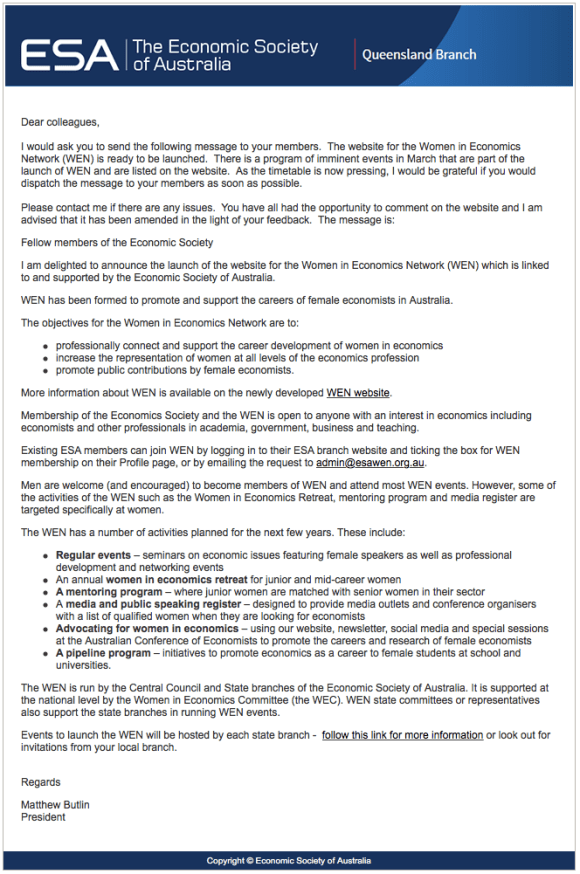
I strongly support the intiative described below.  For further information please visit http://esawen.org.au.

womenineconomicsnetwork

Categories
Infrastructure Policy

Investing in Infrastructure

intersection

It is easy to think of investing in infrastructure as something that needs to be done on a routine basis – repairing power stations that supply our electricity or maintaining rail lines that carry our commuters and freight. This real foundation of our economy and society should be prudently addressed in a routine and methodical way, free from political and ideological agendas. Close to the operational level, asset management strategies address this.

At the same time, investing in infrastructure is anything but routine. It is a platform in which we determine the future competitiveness of our country, much the same as any other state. It also determines the extent to which we can maintain and enhance an open and inclusive society, one that also shapes long-term responses to climate change.

Infrastructure investment is a long-term investment to secure that future capacity and productivity in our economy. It provides a demand for highly skilled jobs in the professional service sectors, driving future employment growth.

While it can provide short-term stimulus through the installation and commissioning of capital assets, the long-term benefits are far more significant. The Depression-era stimulus from constructing the Sydney Harbour Bridge has been far outweighed by the benefits from the annual flood of traffic traversing the bridge over decades. Emphasis on the short-term stimulus from consuming resources to construct infrastructure misses the point.  These projects are justified only on the basis of the long-term streams of benefits they can generate.

Infrastructure investment needs to expand a nation’s economic frontier – it lifts potential constraints on future economic growth. In the past Australia has benefited from the development of its road and rail networks, the creation of terminals (airports and seaports) and the development of a copper-based telecommunications system. Our future points to benefits accruing from fast fibre optic broadband, carbon reducing power investments and new high-speed rail technologies.

Australia has been facing a challenge to the core model for funding public infrastructure for a long time. The use of the taxation system to generate funds for public investment will not be sufficient to meet all of the infrastructure investments we require. We cannot do it out of our government budgets. It was not enough in the past either, and we imported foreign capital in the form of sovereign loans.

The Australian economy was simply not large enough in the past to fund the infrastructure investments that underpinned the economic growth we have achieved and the living standards we enjoy.

The nature of our infrastructure investments and what constitutes economic infrastructure have changed over time. Historically we have looked to the physical capital side of the economic growth equation, with less emphasis on the human capital side.

We need a new bipartisan consensus that effectively decouples infrastructure from political and budget cycles, to drive investment in the public interest. Emerging governance arrangements at the federal and state levels are showing promise but remain captured by legislative, budget and bureaucratic cycles.  They are still in their early stages of maturity in the Australian federal system of government.

A new commitment to investment is required that explicitly learns the lessons from past failures, avoids the ghosts of white elephants (the lonely tunnels, quiet dams, and bridges to nowhere) and addresses the pressing demands for the infrastructure services that support a modern 21st-century economy.  We need to be honest about past mistakes, in order to avoid them in the future.

We need investment in infrastructure that does the following:

  • repairs and rehabilitates our stock of existing infrastructure assets to continue producing existing streams of services that our citizens demand
  • expands the capacity of our economy by growing our infrastructure asset base with newer, smarter investments that are more productive in supplying services, lowering input costs
  • improves the productivity or our economy by investing in new types of infrastructure technology, enabling new kinds of infrastructure services enabling improvements to other sectors of the economy
  • enhances human capital with savvy health and education infrastructure investments that make our people smarter and healthier, improve the productivity of our economy and improve the quality of life for all.

These investments will position Australia to be at the front end of continuing global technological revolutions, set us on a lower carbon trajectory and expand the frontier of economic possibilities for the economy.

Rather than run down our current assets we must renew, reinvigorate and expand them as prudent custodians for future generations. These investments will be the backbone on which our future prosperity will stand.

Categories
Economics

Entrepreneurs

At the heart of economic progress are entrepreneurs. An entrepreneur is someone who starts up a business by creating a new product of service that someone else wants to buy.

Entrepreneurship involves high levels of creativity and innovation, and is not without considerable risk. Converting a great idea into a physical prototype or beta version of a service requires managerial skills, lots of time and lots of energy. It can also require a solid approach to patenting a product. Entrepreneurs have to interact with governments, potential investors and lenders, patent attorneys, as well as identifying, recruiting and driving high performing staff.

Joseph Schumpeter was amongst the first to conceptualise entrepreneurship. He drew a clear distinction between inventions and innovations, noting entrepreneurs not only invented but also included new means of production, new products and services as well as new forms of organisation.

Today we can see this in the business models of firms as different as Amazon, Google and Facebook. In the past, innovation in production led to mass production assembly lines, lean manufacturing, and, more recently, mass customisation of industrial and consumer products. Innovation in customer service is now increasingly blurring the boundaries between producer and consumer, as some information sevrices are crown sourced, and businesses operate platforms that simply facilitate social interaction on defined topics. The consumers develop and drive the content. Innovation in the service and knowledge economies is becoming increasingly important.

However, new ideas, methods and products/services are also accompanied by high levels of risk. So the rewards need to be significant. Not all innovators capture the rewards. Entrepreneurs have to address risk, ambiguity and uncertainty in order to be successful. They employ a wide range of strategies including: continuous improvement methods, application of technology; use of business analytics/intelligence; frugal/lean approaches; optimised talent management and development of leading edge/future oriented products and services.

Is the role of entrepreneurship critical to economic growth or does public policy in many countries overemphasis it at the extpense of improving the productivity and efficiency of existing industries? What do you think?

——–
This Micro Brief is part of an ongoing series provided as a general public information service.  These concepts underpin modern economic analysis.  Find out more about smarter capital investment decisions using economics at http://www.lyttonadvisory.com.au.

Categories
Economics

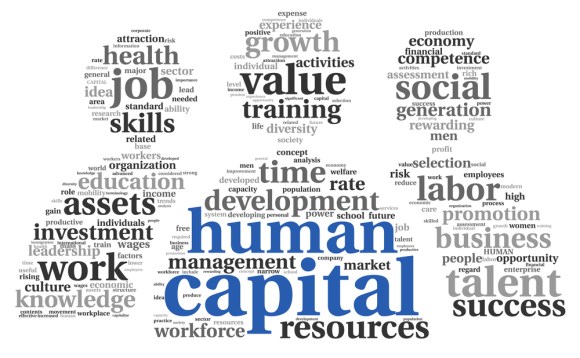
Human Capital

human-capital

Capital in economics usually refers to assets that yield income and other useful outputs over time.  People usually of bank accounts, shares in companies, assembly lines or steel plants.

However these are not the only forms of economic capital.  Education, expenditures on medical care and training in business skills are also capital.  That is because they raise earnings, improve health or add to a person’s good habits.  Economists regard these as investments in human capital.  This is because people cannot be separated from their knowledge, skills, health or values in the way they can be separated from their financial and physical assets.

Increasingly, skills such as creativity, empathy, contextual thinking and big picture thinking are becoming increasingly important.  These provide a critical response in maintaining high standards of living in the face of low wage competition.

It is an aggregate economic view of people acting within economies.  An attempt to capital social, biological, cultural and psychological complexity as they interact in economic transactions.

Unsurprisingly many economists explicitly connect investment in human capital development to education, productivity and innovation.

So should the sum of us be simply expressed in terms of our relative merit in an economic system?

——–

This Micro Brief is part of an ongoing series provided as a general public information service.  These concepts underpin modern economic analysis.  Find out more about smarter capital investment decisions using economics at www.lyttonadvisory.com.au.

Updated: 18/1/17.

Categories
Economics

Producers

producers

A producer creates and supplies goods or services.  They typically combine labour and capital – sometimes called factors of production – to create output.  Businesses are the main examples of producers and are usually what economists have mind when talking about producers.  However governments are producers of some kinds of services (such as police services, public schools, universal mail delivery and defence) and sometimes goods, such as when a government owns natural resources.  Households and individuals are producers of non-market goods and services, such as child-rearing, cleaning and food cooking.

Producers pay wages to workers.  This may include salaries, bonuses and benefits such as health insurance.  Producers also pay for capital.  This is called economic rent and includes interest payments.  Anything that is left over for the owner of the business is called economic profit.

Increasingly some consumers are also becoming producers as the scale and cost of marshalling resources to create goods and services falls.  They become ‘prosumers’.

To what extent are the boundaries between producers and consumers becoming increasingly blurred?  Is this happening more in the provision of services, rather than goods; and is it more likely in social media contexts?

Does the traditional role of a producer remain relevant for provision of economic infrastructure and, more importantly, the delivery of services from that infrastructure?

——–

This Micro Brief is part of an ongoing series provided by Lytton Advisory as a general public information service.  These concepts underpin modern economic analysis.  Find out more about smarter capital investment decisions using economics at www.lyttonadvisory.com.au.


Categories
Economics Infrastructure Transport

Value Uplift and Capture

money_bridgeValue capture and uplift associated with infrastructure projects are often discussed but not well understood. This is because the issue sits at the crossroads of competing public and private interests, as well as institutional imperatives of project proponents.

From an economic perspective, it is a method of generating funds from economic rents – unearned private benefits from public investments – to deliver infrastructure projects. In the Australian context it is increasingly heralded as a potential new source of investment funds. However aspects of this approach have been used in both the US and the UK.

While there are over one hundred studies on value uplift around transport modes, impacts of other infrastructure types remain less well understood.

The Bureau of Transport, Infrastructure and Regional Economics has identified a range of factors assessing land value uplift challenging:

  • separating factors driving uplift to identify the infrastructure impact;
  • sampling errors in the estimation of land prices;
  • determining the catchment for beneficiaries / the project area of influence; and
  • isolating value uplift from network effects.

In essence, value uplift is where value flows from an infrastructure network are capitalised into land values. This is often observed regarding transport networks.

For the reasons outlined above, identifying value uplift is difficult in terms of identifying both who benefits and at what value. It is also why it has not been widely used to fund public infrastructure. However, there are two factors driving consideration of value capture funding:

  • economic rents accrue to landholders benefiting from economic infrastructure – in effect private, unearned returns from public investment in public assets – these are above and beyond use benefits and raises a critical equity issue; and
  • use revenues, particularly from public transport investments, are insufficient to fund infrastructure expenditures and are often complemented with significant subsidies from the public purse – value capture is seen as an alternative to increasing the general level of taxation revenue.

Overseas experience provides some guide to the types of value capture approaches, and each approach has its own pros and cons:

  • tax inventive funding – hypothecated value uplift based on an expected increase in property tax revenue. Commonly, a government issues a bond, effectively guaranteeing a return that matches the expected value uplift increment. The value at risk, however, remains with the government issuer.  This is one of the reasons most government treasuries oppose issuing these bonds – there is no transfer of financial risk associated with the value uplift increment.
  • betterment taxes – land owners thought to be direct beneficiaries of an infrastructure development – but not necessarily users themselves – pay a levy. The levey is typivally on the unimproved capital value of the land. A key challenge with this approach is achieving a correct attribution of the increase in land value from the provision of the infrastructure and related services.
  • transaction taxes – typically levied on property transfers. In this case, some of the property value increase attributed to the provision of publicly funded infrastructure will be collected by these taxes. However, this attribution is again difficult to to assess.
  • joint development – usually where a licence or concession is given to a private agency to develop surrounding land in exchange for delivering economic infrastructure and services. This is a significant model for railway development, and is currently in use for heavy rail in Asian countries.

While a range of estimation problems have been identified above, network architecture remains the most significant factor. Hierarchy, connections and density influence this. While the literature on network architecture largely focuses on transport infrastructure, specifically road and rail assets, further analysis is needed of other linear infrastructure (i.e. water, electricity and gas).

Two broad solutions emerge: either a more to a more general land tax; or further detailed investigation of each specific infrastructure project. The important point is to adopt an approach that minimises market distortions and promotes economic efficiency.

Categories
Economics

Productive Resources

factors_of_productionProductive resources are the requirements for producing goods and services in an economy.  Often economists call these ‘factors of production’.   Usually these are represented as capital, labour and land.  Entrepreneurship is increasingly included as a fourth factor.

Capital usually comprises fixed capital such as structures, buildings, physical plant, machinery and tools.  Circulating capital is often described in terms of components and raw materials.

Labour includes all aspects of human resources and may be unskilled, semi-skilled or skilled.

Land comprises naturally occurring resources where supply is inherently fixed.  These resources may be renewable or non renewable.  Examples are geographic locations, mineral deposits, forests, fisheries, air quality, geostationary orbits and parts of the electromagnetic spectrum.

Entrepreneurship is often described as the capacity and willingness to develop, organise and manage a business venture along with any of its risks in order to make a profit.  It is often closely associated with starting new businesses.

How we define what we use to supply goods and services is critical to our understanding of the economy.  How can we test if the traditional  capital-labour-land approach is still valid?  How strong or significant is entrepreneurship in the mix?

——–

This Micro Brief is part of an ongoing series provided as a general public information service.  These concepts underpin modern economic analysis.  Find out more about smarter capital investment decisions using economics at www.lyttonadvisory.com.au.

Categories
Economics

Consumers

consumers

Consumers are individuals who acquire goods or services for direct use or ownership, rather than for resale or use in production or manufacturing. This group is a critical element in an economy.

The needs and wants of consumers drive economic activity and direct the production and distribution of goods and services. Without them producers lack a key motivation to produce.

Consumers are said to be sovereign because they decide what bundles of goods and services they wish to purchase. However they value this consumption also in terms of quality and safety.

Many consumers are now shifting to becoming ‘prosumers’ – consumers that are also producers or influence the products and services being created by being directly involved in their production. This is especially the case for services delivered via the Internet – including information and media on the social web.

So are we seeing a new paradigm with ‘prosumers’ or just a blurring of boundaries as the same economic participants take on multiple roles in the economy?

——–

This Micro Brief is part of an ongoing series provided by Lytton Advisory as a general public information service.  These concepts underpin modern economic analysis.  Find out more about smarter capital investment decisions using economics at www.lyttonadvisory.com.au.