Categories
development Economics Infrastructure

Appointment

Lytton Advisory is pleased to announce that Managing Director Craig Lawrence has been appointed to a Panel of Economic Experts for Australia’s Solomon Island Resource Facility (ASRIF).

ASIRF supports the Department of Foreign Affairs and Trade in meeting the objectives of Australia’s aid program in the Solomon Islands.

Craig previously advised the Ministry of Infrastructure Development there on how to incorporate economic tools to assess climate change adaptation strategies into the transport invesment guidelines.

This year marks the tenth anniversary of Lytton Advisory’s engagement with Pacific Island nations on a range of economic and infrastructure issues.

Categories
development Economics Infrastructure Local Government Transport

Boston Infrastructure

When Lytton Advisory was in the US last month we visited Boston. Moving around the old parts of the city, a number of infrastructure challenges were evident.

Boston’s infrastructure is aging, with many of its roads, bridges, and transit systems in need of repairs and upgrades. This can lead to increased maintenance costs and disruptions to transportation and other services, which can impact the city’s economic competitiveness.

A significant part of the old city is on reclaimed land. The city is practically the Venice of the US. It is vulnerable to the impacts of climate change, including sea level rise, which could have significant impacts on the city’s infrastructure. This can lead to flooding and damage to critical infrastructure, such as roads, bridges, and buildings, which could be costly to repair and disrupt economic activity.

Like many other cities, Boston is facing a housing affordability crisis, with high housing costs and a limited supply of affordable housing options. The city has some of the highest rents in the nation. This can make it difficult for low- and middle-income families to find suitable housing, which can limit economic opportunities for those who cannot afford to live in the city.

Boston also experiences significant traffic congestion, which can impact the city’s economic competitiveness by increasing commuting times and reducing productivity. According to the Global Traffic Scorecard, Boston drivers lost about 134 hours of their lives sitting in traffic in 2022. That’s a jump up of 56 hours from 2021 as more workers head back to the office, though still 10% less than pre-pandemic levels. This can also have negative environmental impacts, such as increased air pollution.

Finally, some locals mentioned to me that Boston is also facing challenges related to digital infrastructure, such as access to high-speed internet and other digital technologies. This can impact economic growth and innovation, as well as limit access to important services and resources for residents. Nearly 15% of households in Boston do not have a subscription to Internet service at home, and more than 32,000 households have no Internet access at all. However, I am not as sure how significant the digital divide is in Boston.

These challenges are all known and potentially solvable. Focus and resources are needed to resolve them. The city has huge potential to address these issues given its role in Massachusetts and the nation’s life, as well as its long history of development and adaptation.

Categories
Climate Change Cost Benefit Analysis development Economics Infrastructure

Infrastructure Planning in the Pacific

Infrastructure investment planning in the context of Pacific Island nations requires a tailored approach that takes into account the unique characteristics and challenges of these countries. This is because Pacific Island nations have small populations, are geographically dispersed, and have limited resources. Therefore, infrastructure planning must be done in a manner that reflects their unique needs and priorities.

One of the best techniques for infrastructure investment planning in the context of Pacific Island nations is conducting a comprehensive needs assessment. This involves engaging with local communities and stakeholders to better understand their needs and priorities. This process is critical for identifying infrastructure gaps and prioritizing investment projects. Lytton Advisory considers this is best done at agency or infrastructure sector level.

Another important technique for infrastructure investment planning is taking a multi-sectoral approach. Infrastructure planning must take into account the interdependence of different sectors such as transportation, energy, water and sanitation, and telecommunications. A holistic approach is essential to ensure that infrastructure investments are aligned with the overall development goals of the country. In our view it also help more effective conversations with donors and private investors, helping countries retain greater sovereignty over national priorities.

Climate resilience is also a critical consideration in infrastructure investment planning in Pacific Island nations. These countries are particularly vulnerable to the impacts of climate change, and any infrastructure investment planning must take this into account. Projects should be designed to withstand extreme weather events and rising sea levels. Risk identification and mitigation are critical factors here.

Engaging the private sector can help to leverage additional resources and expertise for infrastructure development. Public-private partnerships can be a viable option for financing and delivering infrastructure projects. Private sector engagement can also help to promote innovation and efficiency in infrastructure development. However, the ability to engage the private sector also depends on national government capacity to see the commercial interests and incentives with great clarity.

Capacity building is critical to ensure that Pacific Island nations have the skills and expertise necessary to plan and implement infrastructure projects. This includes training in project management, procurement, and technical skills. By investing in capacity building, Pacific Island nations can become more self-reliant in planning and implementing infrastructure projects.

Sustainable financing mechanisms, such as green bonds and climate funds, can be used to finance infrastructure projects that have positive environmental and social impacts. This is important for ensuring that infrastructure investments are aligned with the overall sustainable development goals of Pacific Island nations. This also means identifying and avoiding some predatory financing practices as well, particularly where there might impose difficult burdens on the national treasury.

Finally, it is important to monitor and evaluate infrastructure projects to ensure that they are delivering the intended benefits and to identify areas for improvement. This includes tracking project performance against key indicators and engaging with stakeholders to gather feedback. By monitoring and evaluating infrastructure projects, Pacific Island nations can continuously improve their infrastructure planning and delivery processes. This is one of the hardest things to do, but has the potential to delivery greater informational value for future projects.

Categories
development Economics Infrastructure Lytton Advisory

Appointment

Lytton Advisory is pleased to advise that in December 2022 Craig Lawrence was appointed as a consultant to the Pacific Regional Infrastructure Facility (https://www.theprif.org/what-we-do).

He will be assisting PRIF by helping Pacific Island states develop national infrastructure investment plans to drive economic and social development.

Craig is Managing Director of Lytton Advisory. For the past nine years he has led teams of economists examining infrastructure and public policy issues.

Categories
Economics Infrastructure

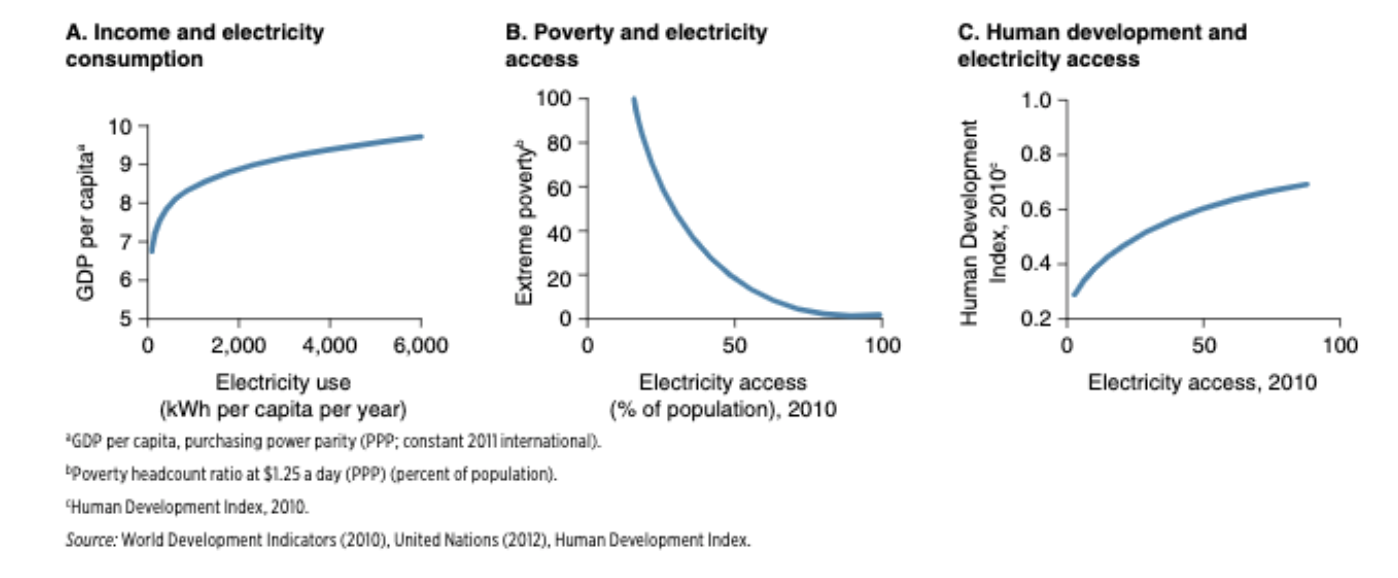
Three Reasons for Electrification

Screen Shot 2019-05-18 at 3.03.14 pm
Three quick images that show why electrification is so important to developing countries like Papua New Guinea. Increasing use goes hand in hand with higher levels of GDP per captia. Poverty is less and human development increases with higher levels of access. 
Categories
development Economics Infrastructure Policy

Q&A With David Baxter, PPP Navigator and Infrastructure Specialist

ppp-infrastructureI chatted recently with David Baxter, an infrastructure specialist with significant experience in public-private partnerships. He shared some of his insights with me.

He gave me some meaningful comments regarding challenges facing governments in providing public infrastructure and how commercial interest can be created, risks shared and benefits for communities achieved.

So how would you characterise recent PPP activity in the Pacific?

Much of the activity seems to be focused on small island nations or be tied into China’s Belt and Road Initiative. Although there is great merit in building up these island nation trade capabilities through the improvement of port and airport facilities, the following questions need to be asked:

  • Are these facilities being constructed in the interest of the host nations or are they being built for geopolitical leverage?
  • Can these small island nations and even bigger nations afford these projects?
  • Are adequate feasibility studies being done on the financial and commercial viability of the projects?
  • Are full and competitive procurements being pursued?
  • Is the long-term sustainability and resilience of PPP projects being considered?

Many countries have PPP policies in place and a PPP unit located in their Treasury or Finance departments. What are some of the biggest mistakes you have seen in implementing PPP policy?

The following are the most common that I see:

  • In many instances, the PPP Units are the initiators of PPP projects when they are imposed upon unwilling line ministries which have not always been consulted on the viability or desirability of projects.
  • Often the laws and best practices that are introduced, get ahead of institutional ability to implement the laws accordingly and so delays occur as everyone tries to meet requirements imposed by regulators.
  • In some instances, the PPP Units try to be autonomous of the Treasury or the Finance Ministry (for political reasons) and this then leads to conflict between the institutions that is not healthy in the long run.
  • Often the PPP Units do not have well define mandates and this leads to confusion on whether they should provide technical support to government institutions or whether they should be the initiator of PPPs. It is important that they realize that their activates should subject to national procurement laws and they are not a law unto themselves.

What characteristics do you think differentiate infrastructure PPPs from other types of PPPs?

Primarily the greater level of due diligence that needs to be completed on private sector partners due to the long-term commitments that are required and their ability to manage risk for 30 + years. Most typical contracts rely on the design-build element. PPPs require financing and O&M on top of this which requires that the public sector must monitor the performance of its long-term partner and the performance-based parameters.

What are the most significant conditions necessary to ensure an infrastructure PPPs is successful?

Appropriate allocation of risk during the feasibility, procurement, and contract award stages and monitoring and immediate mitigation of risk when it occurs.

PPPs are often seen as a panacea for difficult national budget circumstances. What are the risks around developing PPPs with this as the prime consideration?

In many instances, PPPs should not be implemented because they do not pass the litmus tests required such as Value for Money, commercial and financial feasibility, etc. They cannot be seen as an automatic panacea, it needs to be proven that proposed projects are viable and feasible as well as sustainable to be a panacea.

What governance arrangements are more effective for infrastructure PPPs?

Governments need to be fully engaged in the management of PPP contracts. They cannot step away and only engage the private sector partner when the close-out phase is reached. Many government employees do not understand the level of commitment required from their side and the need to have a technical understanding of PPPs to ensure that they are implemented correctly.

Is a rigorous public sector comparator really that important for an infrastructure PPP?

Most certainly in countries that are still developing or which are launching their first PPP projects. As PPP national markets mature, the private sector can become a more competent partner and this leads to a more trusting and professional collaboration.

PPPs often address a particular infrastructure service or need. How effective are they in addressing asset maintenance and preservation of benefit streams from existing infrastructure?

Brownfield PPP projects can be a minefield due to many unknowns. However, experience gleaned from existing projects and infrastructure can be beneficial – so it depends. However, I believe that every PPP project is unique and thus a certain amount of innovation is necessary to improve asset preservation and to do it better than it was done in the past. The goal should always be simple – do it better each time.

PPPs are inherently commercial in nature, as risk along with return is transferred to the private sector. How can social benefits and returns be properly incorporated in the development of PPPs?

I believe that this has to do with a mature and well-defined understanding of Value for Money: adherence to people first PPPs is an option as well as incorporating the SDGs into project goals and objectives. This can help project proponents determine the non-commercial elements of risk transfer in socially beneficial projects and the possible subsidies that might need to be introduced to offset non-commercial vitality pertaining to certain risks.

If every PPP had to contain one mandated element, what would that be?

By answering the following questions –

  • Why are we doing this as a PPPs?
  • Are we confident that this should be a PPP?

Good answers require completion of due diligence, gaining political support, full stakeholder engagement and full disclosure of all information to all private sector parties equally, so that they all understand the merits of the project.

If these answers cannot be motivated and supported fully – do not do it as a PPP.

David, thanks so much for making the time available to talk with us and share these insights.

 

Categories
development Infrastructure Policy Transport

Success Diagnosed

png-roads

Very pleased to see PNG and Australia have signed an Agency Support Arrangement for the PNG Department of Transport this month.  I led an earlier Agency Capacity Diagnostic of the Department for the PNG Transport Sector Support Program.

“These diagnostics are undertaken by independent consultants and provide the agency management with objective assessments of capacity, including through the identification of existing strengths and skills gaps. The diagnostics also provide recommendations for addressing agency needs.  TSSP then works closely with the Australian High Commission and agency heads to develop programs of structured capacity support to improve performance and address identified priority capacity gaps.  This is formalised through  Agency Support Arrangements (ASAs) which detail the multi-year frameworks for funded activities to bridge some of the gaps highlighted by the diagnostics.” (Source: TSSP website)

A great outcome which also included a lot of hard work from senior officers in the Department, the Transport Sector Support Program and at the Australian High Commission.

[Link to article]


Categories
Economics Infrastructure Policy

Significance of O&M in Infrastructure

maintenance

Installation of new infrastructure assets creates streams of services and improvements to existing services for users. Benefits accrue to these uses as well as a wider set of stakeholders. Maintaining the service potential is a critical element in ensuring that value for money is achieved from the initial capital investment.

However, many governments and asset managers are under significant pressure to trim maintenance budgets and scrimp on operating costs. In some contexts, this emerges as an extreme build-neglect-build scenario. Many Pacific Island nations experience this, as do a number of smaller Australian local government authorities. The full lifecycle cost of infrastructure assets is not factored into the budget planning processes of these organisations. Similarly, many private sector operators of infrastructure have commercial and financial incentives to focus on next quarter financial performance rather than long-term service provision from these assets.

The back end of infrastructure is seen as much less interesting, but it is where all the benefits are generated. So approaches to operating and maintaining these infrastructure assets is as equally critical as the planning and investment decisions to deliver them.

Two broad maintenance strategies are predictive maintenance and condition based maintenance. Predictive maintenance is like regular scheduled servicing based on the design performance of an infrastructure asset. It is less costly to implement but also less likely to match the actual performance of the asset. Condition based maintenance requires the collection of data and information about the actual performance of the asset and provision of a tailored asset maintenance response.

The approaches set up an economic challenge. Should an infrastructure manager simply maintain its assets according to schedule and only collect data and information on condition at the times of regularly scheduled servicing? Or should some initial data costs be incurred to change and adapt design-based, predictive maintenance? Decisions to underfund reasonable maintenance activities need to be made with good information and in an appropriate strategic context.

So it depends. In one sector, for example, the response is clear but not clear-cut. Analysis of wind turbine maintenance to address gearbox, generator and blade failure scenarios shows that for small wind turbines, predictive maintenance is more cost effective than condition based maintenance. Condition based strategies were based on an array of sensor data (optical, oil, vibration and temperature). However, for larger turbines, condition based maintenance where there is a high expected gearbox failure rate is a much better approach. In that instance, the cost of collecting additional data and information enables timelier and more appropriate servicing of the turbines.

For these reasons, infrastructure owners and managers need to ensure there are effective asset management and maintenance policies included in their strategic asset management frameworks. It is not enough to supply the assets, as only the services from them will be able to generate the full suite of expected benefits. This can only be achieved when the design potential of these assets is realised over time.

Categories
Infrastructure

Education Infrastructure

Recently I was up in Papua New Guinea for work. The PNG government has an ambitious policy of free primary school education. This requires more education infrastructure right across the country.  I had an opportunity to look at how education infrastructure is being improved through an Australian government project with PNG. The following photos show how classroom conditions have changed through some simple design measures.  Use of the old classrooms only stopped a couple of months ago.


The new school buildings were erected to Australian construction standards. The design featured higher ceilings to improve air flow, fans, and electrical lighting. Blocks of four classrooms and teachers prep rooms were constructed using Besser block. This made better use of the site.  Also, ablution blocks at some schools were upgraded, which has a significant positive impact on female participation in education.

These clean, functional classrooms provide a much better learning environment for students. This is infrastructure that should last a long time in a very challenging environment.

Categories
Economics Lytton Advisory Policy

A Civil Society

kuwaitidiwaniya

While working recently in Kuwait, I was privileged to be invited to a diwaniya (https://en.wikipedia.org/wiki/Dewaniya) along with colleagues from my project team.  This type of forum is fairly unique to Kuwait and it a key element of their civil society.

For around an hour we discussed industry policy with a number of leading lights from Kuwait’s business community.  I learned a lot from them.  The discussion took our project team beyond the numbers and statistics we were considering to just how the reforms might actually be implemented.  The exchanges were robust but expressed in good humour and with great politeness.

I think these kinds of gatherings are extremely important in shaping consensus.  Kuwait has hundreds of diwaniyas and candidates for public office often seek to turn up at as many as possible around election time.  In my view, it removes a lot of the adversarial nature that characterises public discourse in Western countries.  Where hard decisions are needed to effect significant change, a consensus based approach may deliver better outcomes than a crash or crash though approach.

Australia used to do evidence-based, consensus-driven public policy quite well.  It was grounded in clearly explaining the need for change.  I fear now that the people putting themselves forward for public office are increasingly driven more by populism and a startling touch of irrationality.