Categories
Climate Change Cost Benefit Analysis development Economics Infrastructure

Infrastructure Planning in the Pacific

Infrastructure investment planning in the context of Pacific Island nations requires a tailored approach that takes into account the unique characteristics and challenges of these countries. This is because Pacific Island nations have small populations, are geographically dispersed, and have limited resources. Therefore, infrastructure planning must be done in a manner that reflects their unique needs and priorities.

One of the best techniques for infrastructure investment planning in the context of Pacific Island nations is conducting a comprehensive needs assessment. This involves engaging with local communities and stakeholders to better understand their needs and priorities. This process is critical for identifying infrastructure gaps and prioritizing investment projects. Lytton Advisory considers this is best done at agency or infrastructure sector level.

Another important technique for infrastructure investment planning is taking a multi-sectoral approach. Infrastructure planning must take into account the interdependence of different sectors such as transportation, energy, water and sanitation, and telecommunications. A holistic approach is essential to ensure that infrastructure investments are aligned with the overall development goals of the country. In our view it also help more effective conversations with donors and private investors, helping countries retain greater sovereignty over national priorities.

Climate resilience is also a critical consideration in infrastructure investment planning in Pacific Island nations. These countries are particularly vulnerable to the impacts of climate change, and any infrastructure investment planning must take this into account. Projects should be designed to withstand extreme weather events and rising sea levels. Risk identification and mitigation are critical factors here.

Engaging the private sector can help to leverage additional resources and expertise for infrastructure development. Public-private partnerships can be a viable option for financing and delivering infrastructure projects. Private sector engagement can also help to promote innovation and efficiency in infrastructure development. However, the ability to engage the private sector also depends on national government capacity to see the commercial interests and incentives with great clarity.

Capacity building is critical to ensure that Pacific Island nations have the skills and expertise necessary to plan and implement infrastructure projects. This includes training in project management, procurement, and technical skills. By investing in capacity building, Pacific Island nations can become more self-reliant in planning and implementing infrastructure projects.

Sustainable financing mechanisms, such as green bonds and climate funds, can be used to finance infrastructure projects that have positive environmental and social impacts. This is important for ensuring that infrastructure investments are aligned with the overall sustainable development goals of Pacific Island nations. This also means identifying and avoiding some predatory financing practices as well, particularly where there might impose difficult burdens on the national treasury.

Finally, it is important to monitor and evaluate infrastructure projects to ensure that they are delivering the intended benefits and to identify areas for improvement. This includes tracking project performance against key indicators and engaging with stakeholders to gather feedback. By monitoring and evaluating infrastructure projects, Pacific Island nations can continuously improve their infrastructure planning and delivery processes. This is one of the hardest things to do, but has the potential to delivery greater informational value for future projects.

Categories
Economics Infrastructure Lytton Advisory

Is multi-criteria analysis a valid tool in infrastructure planning?

Multi-criteria Decision Analysis – Participedia

Multi-criteria analysis (MCA) is a valid tool in national infrastructure planning because it allows decision-makers to consider a wide range of factors and objectives in their decision-making process. MCA is a systematic approach that helps to identify, evaluate, and compare alternative options based on a set of predetermined criteria.

There are many factors that can impact the planning and development of national infrastructure, including economic, social, environmental, and technical considerations. MCA allows decision-makers to take these factors into account and weigh them against each other in order to make informed and balanced decisions. This can help to ensure that infrastructure projects are not only economically viable, but also socially and environmentally sustainable.

MCA can also be used to identify trade-offs between different criteria and to prioritise certain objectives over others. For example, a decision-maker might prioritise the economic benefits of a project over its environmental impact, or vice versa. This can help to ensure that infrastructure projects align with the values and priorities of the community and stakeholders involved.

Overall, MCA is a valuable tool because it allows decision-makers to consider a wide range of factors and objectives in a structured and systematic way, which can ultimately lead to better outcomes for all stakeholders involved.

If you use MCA in your organisation, feel free to share your approach in the comments.

Categories
Infrastructure Lytton Advisory Policy

What is the best way to screen infrastructure proposals?

Infrastructure Planning

Recently I have been thinking about how early-stage screening of infrastructure proposals can be made more effective. Time and again I see lists of projects here in Australia that are unfunded, undeveloped and, frankly, never-deliverable.

A key element of good infrastructure planning is the capture of the complete suite of proposals that could be under consideration at a point in time.  This is critical for national infrastructure planning.  Part of this also needs to consider the best way to screen all of these proposals, so determine which ones might be come investment ready projects.  There are several best practices that can be followed when screening infrastructure proposals.

Identify the goals and objectives of the project: It is important to have a clear understanding of the purpose and potential impacts of the project. This will help to ensure that the proposal aligns with the goals and objectives of the organization or community.

Evaluate the feasibility of the proposal: Consider the technical feasibility of the proposal, including whether the proposed solution is technically sound and can be implemented within the available resources.

Assess the financial viability of the proposal: Determine the costs associated with the proposal and consider the potential return on investment.

Consider the environmental and social impacts: Infrastructure projects can have significant environmental and social impacts. It is important to consider these impacts and ensure that the proposal takes them into account.

Involve stakeholders in the process: Engage with stakeholders, including community members, local businesses, and other interested parties, to gather input and ensure that the proposal is responsive to the needs and concerns of the community.

Utilize a formal proposal review process: Establish a formal process for reviewing and evaluating proposals, including the use of a proposal review committee or panel to evaluate and provide recommendations on proposals.

I wonder how many proposals processes check off against these issues. What has been your experience?

Categories
Economics Infrastructure Lytton Advisory

What are the infrastructure priorities in the Pacific?

Infrastructure: Definition, Meaning, and Examples

A significant challenge in developing infrastructure plans is prioritising the pattern of infrastructure investment.  In the Pacific, the infrastructure priorities of island nations are likely to vary depending on the specific needs and resources of each individual country. However, there are some common priorities that may be considered.

Transportation: Many Pacific Island nations rely on air and sea transportation for the movement of goods and people. Improving and expanding transportation infrastructure, such as airports, ports, and roads, can help facilitate economic development and improve connectivity within and between islands.

Energy: Many Pacific Island nations rely heavily on fossil fuels for energy, which can be expensive and environmentally harmful. Prioritising the development of renewable energy sources, such as solar and wind power, can help reduce reliance on fossil fuels and improve energy security.

Water and sanitation: Access to clean water and proper sanitation facilities is essential for public health. Improving water and sanitation infrastructure can help reduce the incidence of waterborne diseases and improve overall health outcomes.

Communications: Improving telecommunications infrastructure, such as internet connectivity and mobile phone networks, can help connect remote communities and facilitate economic development.

Healthcare: Access to healthcare is often limited in Pacific Island nations due to limited infrastructure and resources. Improving healthcare infrastructure, such as hospitals and clinics, can help ensure that people have access to essential healthcare services.

In addition to sectoral-focussed opportunities, there may also be individual, specific large scale projects that are part of a broader pattern of planned national development.  

Context is King in formulating priorities, but it does require an underlying framework of agreed infrastructure classification as well as a set of priority values which potential projects can be examined.

Categories
development Economics Infrastructure Lytton Advisory

Appointment

Lytton Advisory is pleased to advise that in December 2022 Craig Lawrence was appointed as a consultant to the Pacific Regional Infrastructure Facility (https://www.theprif.org/what-we-do).

He will be assisting PRIF by helping Pacific Island states develop national infrastructure investment plans to drive economic and social development.

Craig is Managing Director of Lytton Advisory. For the past nine years he has led teams of economists examining infrastructure and public policy issues.

Categories
Economics Infrastructure Lytton Advisory

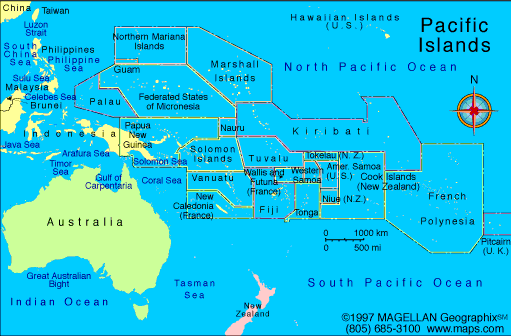
Good Infrastructure in the Pacific

Map of Pacific Islands and Australia

Pacific Island nations have complex requirements for infrastructure.  It is tempting but foolish to see similarities and simply apply a one-size-fits-all.  

However, the best combination of infrastructure assets for Pacific Island nations will depend on the specific needs and resources of each individual nation. In general, however, there are a few key types of infrastructure that are important for the development and well-being of Pacific Island nations.

Transportation infrastructure: This includes roads, ports, airports, and other transportation networks that are necessary for the movement of people, goods, and services within the country and to other countries.

Energy infrastructure: This includes power plants, transmission and distribution networks, and other facilities that are necessary for the generation and distribution of electricity.

Telecommunications infrastructure: This includes networks of communication towers, cables, and other equipment that are necessary for providing telephone and internet services to the population.

Water and sanitation infrastructure: This includes systems for the treatment, distribution, and collection of water, as well as sewage treatment facilities and other infrastructure related to sanitation.

Health care infrastructure: This includes hospitals, clinics, and other facilities that are necessary for providing health care services to the population.

Educational infrastructure: This includes schools, universities, and other institutions that are necessary for providing education to the population.

It is important for Pacific Island nations to have a balanced and well-developed infrastructure system in order to support economic growth, improve living standards, and enhance the overall well-being of the population.  It means having an approach that enables strategic consideration and appraisal of a diverse combination of assets across a diverse set of countries.

Categories
Coronavirus Economics Infrastructure Policy

Impact of Coronavirus on Infrastructure – Initial Thoughts

Mid afternoon snap of LA traffic. Usually at this time of day it would be bumper-to-bumper. The Governor of California has ordered the State’s 40 million citizens to stay home, restricting non-essential movements. Source: The Mercury News, CA.

The coronavirus pandemic will have significant impacts on how we design, develop, fund and operate infrastructure. As the pandemic evolves, the nature of these impacts will emerge, creating increasing risks. There is a stark difference between the impact of the Global Financial Crisis (GFC) and this pandemic. The former was initially a financial liquidity impact that affected cash flows around infrastructure investment and operation.  

The pandemic’s first impacts are likely to be around the loss of human capacity in the systems that support this complex sector. The near term impacts are likely to be more associated with loss of certainty, affecting planning, operation and funding of infrastructure.

There is a range of considerations; which will have varying degrees of impact on governments, communities, organisations and people.

i) Demand-based assets are vulnerable because of the drop in use as with the coronavirus takes away discretionary spending. This particularly so for transport infrastructure, which directly engages with end consumers. Supply chains for these assets will be affected.

ii) Contracted assets have some increasing counterparty risk. Energy assets, for example, depend on the continuing creditworthiness of their counterparties. Many utility services may be called on by state actors to contribute to the overall effort to address the economic impacts of coronavirus.

iii) Merchant infrastructure potentially faces higher volatility in commodity prices and heightened uncertainty of demand. This kind of infrastructure operates at the margin of markets, rather than profiting from significant baseload provision at low, guaranteed margins. It will vary across markets for infrastructure services.

iv) Some specialised infrastructure has exposure to sports. This group of assets has both contracted and demand-based revenues. In Australia, we see the challenges facing our principal football codes with the loss of stadium revenues. It has exposed football codes that have not been developing multi-year contracts for stadiums and areas, and cannot defer refunds and provide credits for future ticket purchases. Some infrastructure owners have not undertaken sufficient risk analysis to determine the financial reserves for significant events.

v) Expect construction delays and cost increases as labour and material shortages occur, as well as the introduction of appropriate occupational health and safety processes are developed to address coronavirus.

vi) Expect the possibility of some operating underperformance of infrastructure assets associated with possible labour and material shortages. As operating environments are adjusted, with some delays in scheduled maintenance, this should only be a short-term impact. Retaining the capacity to do critical maintenance is essential.

vii) Contractual triggering of force majeure declarations may become more likely. The effectiveness of these declarations will depend on the specific wording in each contract, which may create many disputes around non-performance.

viii) Policy exclusions in business interruption insurance may affect the ability of infrastructure asset owners and operators to respond. Management teams are going to have to think more about internal liquidity policies and how to structure their cash flows in both infrastructure transactions and operations.

ix) The debt position infrastructure owners and operators will be compounded by refinancing challenges. More volatile credit markets mean more considerable uncertainty about the costs of refinancing when it is needed. Understanding debt maturation profiles and alternatives will be essential. Assets with long concession periods or very long useful lives possibly have a better ability to manage their short term debt profiles.

Some of these risks might be mitigated in part by the following:

i) Government intervention is more likely to occur. While some government actions might have adverse impacts. Across a range of infrastructure classes, governments might take interaction to support the overall performance of the economy.

ii) Infrastructure businesses are more protected at the enterprise level. Many firms operate in multiple markets and hold multiple sets of infrastructure assets. Also, many infrastructure businesses operate long-live assets with capex plans that can be modified and significant management discretion on operational tempo and allocation of surpluses.

iii) Infrastructure projects typically have strong capital structures. How cash flows are applied is tied to contractual requirements and ensuring funds flow to relevant parties. This is the core of traditional project financing. Infrastructure projects without recourse to full cash-funded debt reserves are exposed to prolonged delays and a slow economic recovery.

Our response to coronavirus is only limited by our understanding of it and our ability to imagine and execute solutions.

Categories
Cost Benefit Analysis Economics Infrastructure

A Damming Idea

Tinaroo Dam Spillway (Source: ABC News)

Constrained water supplies in Far North Queensland are hindering economic development and can threaten water security of a number of towns. Inaction on supply has been driven by feasibility, concerns, funding gaps and worries about environmental sustainability. (1) In addition, politics focussing narrowly on dams as the supply solution runs the risk of missing other smart infrastructure and demand management opportunities to improve supply apart from just bulk storage. (2) Project proponents are also challenged often challenged by a user pay model required by the National Water Initiative. (3)

A strong evidence base of economically viable, financially feasible and prudently sustainable investments is needed to unlock these constraints. The balance between the public purse, private irrigator interests and environmental sustainability needs to be reset.

If considering just dams, what is an appropriate period of cost recovery? If an appraisal period is less than the economic life of the dam, usually an estimate of residual value would be included in the final year of the analysis. For example, a 25-year appraisal period for a 50-year asset, may include an asset value offset of up to 50% in the final appraisal year to ensure cost recovery over the appraisal period approximates around half of the expected use of the asset.

Similarly, where a dam is considered by policy makers to be a catalytic piece of infrastructure that supports and enables economic growth opportunities, an argument that there are economic externalities needs to be established. In effect, this means that not all the economic benefits are being captured by the users – providing a basis for partial public funding alongside expected user revenues. This externality argument is the logical basis for identifying the level of offset to user revenues. It presupposes both other uses for water as well as downstream benefits captured by non-users.

As a starting point, getting the evidence together to make the preliminary case for the residual value argument and a market failure argument around significant externalities is critical.

References:

  1. Parliamentary Library (Australia) Water Management https://www.aph.gov.au/About_Parliament/Parliamentary_Departments/Parliamentary_Library/pubs/BriefingBook45p/WaterManagement
  2. For example, the Sustainable Rural Water Use and Infrastructure Program https://www.agriculture.gov.au/water/mdb/programs/basin-wide/srwuip
  3. National Water Initiative pricing principles (https://www.agriculture.gov.au/water/policy/nwi/pricing-principles)

Categories
Cost Benefit Analysis Economics Infrastructure Transport

A $7 Crossing

Kangaroo Point Pedestrian Bridge artist impression
Kangaroo Point Crossing, Artist Impression
Source: Brisbane City Council

Brisbane City Council has announced a program to construct five ‘green’ bridges across the Brisbane River. [See https://www.brisbane.qld.gov.au/traffic-and-transport/roads-infrastructure-and-bikeways/five-new-green-bridges-across-brisbane] Analysis of the crossing at Kangaroo Point appears most advanced.

There is a handy infographic on Council’s website. Unfortunately, details of how the benefits have been calculated are not publicly available.

What we do know is that Council intends to spend $190 million to build the bridge. Council believes trips per day will rise from 5,300 in 2021 to 6,100 in 2036.

Making a couple of assumptions, we can work out the level of benefit per trip required for this to cover the capital costs. First we assume a 25 year evaluation period (2020-2044) and a 7% real discount rate. We also assume the asset has a 50 year life and include an offset residual value on the capital cost. The capital cost attributable to the evaluation period is a present value of $172.5 million.

Then we extrapolate the average crossings, which rise on an annualised basis from 1.9 million trips in 2021 to 2.4 million trips in 2044. This implies some 54 million trips will take place (2021-2044). However, using trips as a stand in for benefits, a trip today has a stronger present value than a trip tomorrow. The present value of all the trips had they occurred today is 24.5 million.

The capital cost per trip is $3.18 undercounted. In discounted terms, this is $7.03.

Given ratepayers are paying for it, one would hope Council is confident benefits are at least $7.03 per trip in benefits.

Do you think that is the case?

Categories
Cost Benefit Analysis Economics Infrastructure Lytton Advisory

Economics of Infrastructure Podcast

Image result for podcast

Thanks to Gene Tunny, Principal at Adept Economics, for inviting me onto his new podcast series – Economics Explained. We discussed the nature of infrastructure, the services these assets supply and how good economic analysis helps select better infrastructure projects. Gene and I have collaborated on a number of projects over the last two years. He is a leading independent economist who blogs regularly at queenslandeconomywatch.com.

You can listen to the podcast here: https://queenslandeconomywatch.com/2019/09/16/economics-of-infrastructure-interview-with-craig-lawrence-of-lytton-advisory/