Categories
Economics

Scarcity

scarcityA fundamental concept in economics is Scarcity.  It refers to limitations in achieving desired outcomes due to insufficient resources, goods or abilities.


Scarcity creates situations where choices have to be made.  Working out how to make the best use of available resources or finding alternatives to them is fundamental to economics.

Like individuals, governments and societies experience scarcity because human wants exceed what can be made from all available resources.

Even in the new, knowledge intensive economy, where the cost of providing information is low or almost zero, we still have to decide how to spend our time which is scarce.

In one way or another scarcity is likely to remain a significant issue in economics.  What do you think?

——–

This Micro Brief is provided by Lytton Advisory as a general public information service.  Find out more about smarter capital investment decisions using economics at http://www.lyttonadvisory.com.au.

Categories
Economics Policy Transport

Inland Freight

canola

Recently I have been thinking about inland freight and logistics to see how this affects Australia’s seaports. Volumes may be constrained by production factors – you can only grow what you can grow when the environment allows you to grow it – but where these volumes go can be determined by these inland costs.

Policy can have consequences as NSW’s freight and logistics strategy shows. Improvements in freight handling and inland cargo aggregation can reduce costs. Some of these improvements reduce the cost of multi modal handling, as well as reduce the cost of line haul by mode – whether that is by rail or road.

For an economist like me it is a relative comparison game. Relatively lower costs will shift the movement of commodities from one mode to another, as well as shift the direction of commodities. Subject, of course, to existing commercial agreements.

However this is not the only story. The other story is around the development of vertically and horizontally integrated businesses that develop their own end-to-end freight and logistics systems. This means they are able to profit maximize by using less profitable parts of their networks to feed the more profitable parts. These firms are also taking equity stakes in their clients.

This is different to geographically and modally constrained freight and logistics operators – they have to maximize efficiency of throughput at a single point or along the linear operation of a particular mode. They certainly do not own parts of their client’s operations. Also, singular operations cannot transfer price because the other parts of the network or system are owned by other parties, and often singular operations cannot aggregate the volumes of goods required to develop leverage over prices.

This article also provides a gratuitous opportunity to show some of the canola fields near my home town in the South West Slopes region of NSW. I took this picture last week on a visit there. Primary production remains an important part of the freight task, albeit a volatile one that is hostage to world demand, weather and yields.

Categories
Economics

Rise of the Machines

robot

The application of capital has seen fewer workers required to produce more physical goods than ever before.  This has released labour to work in the service and knowledge sectors of the economy.  Increasingly, machines are taking over large numbers of knowledge worker roles.

I think I may have dodged a bullet – at least in the short term.  The BBC has noted that around 35% could be subject to automation.  Actuary, economic and statistical  roles have just 15% chance of becoming automated.  Find out the extent your role might be taken over in the future by a robot at the following link:

http://www.bbc.com/news/technology-34066941

Answering a phone is a job at greatest risk of automation, being a publican is the least at risk!

Categories
Economics Lytton Advisory Policy

A Civil Society

kuwaitidiwaniya

While working recently in Kuwait, I was privileged to be invited to a diwaniya (https://en.wikipedia.org/wiki/Dewaniya) along with colleagues from my project team.  This type of forum is fairly unique to Kuwait and it a key element of their civil society.

For around an hour we discussed industry policy with a number of leading lights from Kuwait’s business community.  I learned a lot from them.  The discussion took our project team beyond the numbers and statistics we were considering to just how the reforms might actually be implemented.  The exchanges were robust but expressed in good humour and with great politeness.

I think these kinds of gatherings are extremely important in shaping consensus.  Kuwait has hundreds of diwaniyas and candidates for public office often seek to turn up at as many as possible around election time.  In my view, it removes a lot of the adversarial nature that characterises public discourse in Western countries.  Where hard decisions are needed to effect significant change, a consensus based approach may deliver better outcomes than a crash or crash though approach.

Australia used to do evidence-based, consensus-driven public policy quite well.  It was grounded in clearly explaining the need for change.  I fear now that the people putting themselves forward for public office are increasingly driven more by populism and a startling touch of irrationality.

Categories
Economics Lytton Advisory Policy

The Rent Economy

Kuwait.jpg

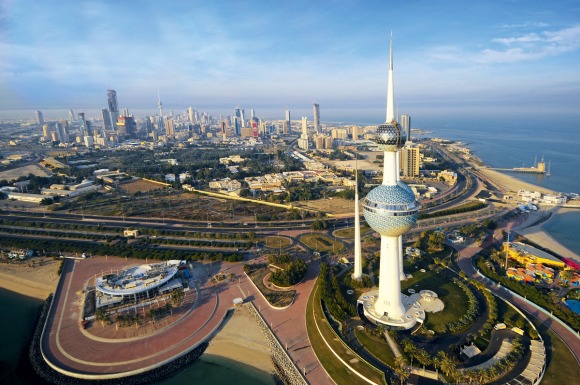
I am currently on assignment Kuwait, one of the oil drenched Gulf states. The economic incentives at play here are unlike anything I have ever seen. At university years ago we spent a couple of hours in undergraduate economics talking about rent seeking – looking for an economic gain without a reciprocal return to society through wealth creation.

Laid out before me is a whole economy resting on this premise and driven by the distribution of oil rents. Kuwait has been pumping around 3 million barrels of oil a day and is targeting 4 million  with some urgency now oil prices have collapsed. Currently this earns them an oil rent (after costs of production and depending on the price) around US$60 million a day. When oil prices were over US$100 a barrel they were getting US$300 million a day. Kuwait has one of the highest dependencies on oil – some 93% of its revenues come from oil rents.

Some indicative figures provide context. The population of Kuwait is about 3 1/2 million people.  Around one third of residents are Kuwaiti citizens, the vast majority of the remainder are guest workers. Guest workers remit around A$25 billion a year to their home countries. This is equivalent to 55% of the Kuwait national budget. Nine in ten Kuwaiti citizens are employed by the government. The country rests on a cash reserve of around US$600 billion.

All businesses, with a few limited exceptions, are required to be 51% owned by Kuwaitis. So there are a range of business partnerships that are not strictly commercial but compliance-based. At any stage, the dominant partner can take control of the business.

This creates some very peculiar incentives. Lack of permanency for guest workers provides little incentive to save, spend or invest in Kuwait. So Kuwait misses out on retaining a significant proportion of their remittances.

With significant reserves in the ground – over 75 years – there is little incentive to move away from this rent-seeking model and the inherent imbalances it introduces. However in the long term that transition will be necessary.

It will be fascinating to see how this plays out over time.


Categories
Economics

Let there be lights …

For all my friends and colleagues in the transport sector, this year we celebrate the centenary of the traffic light.  What a boon that has been to orderly traffic in our major cities across the world – as well as a reliable stream of work for town planners, traffic engineers and even economists!

When Was the First Traffic Light Installed? 5 Fast Facts You Need to Know

And, yes, we economists do measure the economic benefits of traffic lights.  Particularly when you consider installing them at 1,000 intersections:

Click to access traffic-signals.pdf

Of course the big issue is whether we should follow the Europeans and switch to flashing amber during off peak periods.

When we eventually move to three dimensional traffic environments, I wonder how this nodal regulator will evolve.

More importantly, will our legions of pedallists and perambulators prevail in the design of future urban transport systems and kill off King Car?

Or, with the rise of the machines will we simply see motoring evolve through driverless cars into pod platforms?

Either way, as we move into real time, big data clipped from traffic movements will we eventually see the demise of the humble traffic light?

Categories
Economics

Decide Early for Big Impacts

Decisions made just days or weeks into an infrastructure project – assumptions of end user needs, commitments to a schedule, the shape and size of the proposed infrastructure asset – have the most significant impacts on design, feasibility and cost. This is particularly true for large infrastructure projects with complex procurement and construction processes.

As decisions are made later and later in the planning process, their influence decreases. Options to change direction are either closed or become more problematic. Consider road congestion and a decision to proceed with an expensive built infrastructure solution. Not considering demand management opportunities misses valuable benefits in being able to avoid or delay that built cost.

Some minor cost savings can still be realized through value engineering in the latter stages of design, but the biggest cost factors are embedded at the outset in a project’s DNA. Once locked in the project becomes the monster you planned.

Categories
Economics

A Crash Course in Economic Principles

There are many different approaches to understanding economics. Here is one that sets out three broad fields:

  • How people make decisions
  • How the economy works as a whole
  • How people interact

Read for yourself about ten economic principles that support this and save yourself years of study. A lot of applied economics addresses the issues below.

How People Make Decisions 

  1. People Face Tradeoffs. To get one thing, you have to give up something else. Making decisions requires trading off one goal against another.
  2. The Cost of Something is What You Give Up to Get It.  Decision-makers have to consider both the obvious and implicit costs of their actions.
  3. Rational People Think at the Margin. A rational decision-maker takes action if and only if the marginal benefit of the action exceeds the marginal cost.
  4. People Respond to Incentives. Behavior changes when costs or benefits change.

How the Economy as a Whole Works

  1. Trade Can Make Everyone Better Off. Trade allows each person to specialize in the activities he or she does best. By trading with others, people can buy a greater variety of goods or services.
  2. Markets Are Usually a Good Way to Organize Economic Activity. Households and firms that interact in market economies act as if they are guided by an “invisible hand” that leads the market to allocate resources efficiently. The opposite of this is economic activity that is organized by a central planner within the government.
  3. Governments Can Sometimes Improve Market Outcomes. When a market fails to allocate resources efficiently, the government can change the outcome through public policy. Examples are regulations against monopolies and pollution.

How People Interact

  1. A Country’s Standard of Living Depends on Its Ability to Produce Goods and Services. Countries whose workers produce a large quantity of goods and services per unit of time enjoy a high standard of living. Similarly, as a nation’s productivity grows, so does its average income.
  2. Prices Rise When the Government Prints Too Much Money. When a government creates large quantities of the nation’s money, the value of the money falls. As a result, prices increase, requiring more of the same money to buy goods and services.
  3. Society Faces a Short-Run Tradeoff Between Inflation and Unemployment. Reducing inflation often causes a temporary rise in unemployment. This tradeoff is crucial for understanding the short-run effects of changes in taxes, government spending and monetary policy.

Source: Mankiw, Principles of Economics, 2e

Categories
Economics

Q and A

At Lytton Advisory we say that providing commercially oriented economic solutions is all about ‘where infrastructure meets money’. In this Q and A, Lytton Advisory Principal Craig Lawrence explains what this means.

Q: So who are economists and what do they do?

A: Economists working with Lytton Advisory are typically postgraduate qualified professionals. We study, develop, and apply theories and concepts from applied microeconomics and write about economic policy. We study the firm and how its commercial operation affects its financial performance, as well as how groups of firms within an industry compete against one another, and how an industry meets the needs of a market.

Q: How does that relate to the development of infrastructure?

A: Because benefits are spread out over a long time and across a wide range of stakeholders. If all the benefits and costs were accrued in one year we could easily see whether the infrastructure was delivering and how risk was defined.

Q: Is it ever that simple?

A: No. Large capital costs of investing in economic infrastructure are recouped through small amounts of use by large numbers of stakeholders over a long period of time. Economic analysis helps identify where the risks are in building and operating infrastructure, ensuring risk is properly attributed to those best able to handle it. Invariably there are also significant social and environmental impacts that need to be considered.

So we help figure out:

  1. Why specific economic and social infrastructure is required and how users may benefit
  2. What infrastructure can cost to build, operate and maintain
  3. How external factors such as exchange rates, interest rates and technology impact on infrastructure project economics
  4. Whether infrastructure provides a sufficient rate of return to its owners, governing authorities and the wider community, as well as identifying in what form that return occurs – financial, economic, social, or environmental
  5. Who is best placed to bear the various risks around building and financing infrastructure

Q: When do you get involved in an infrastructure project?

A: We provide front-end advice and clarity before anybody even starts building; we do mid-project evaluation to ensure that the project remains commercially and economically valid; and we do post-project evaluation to ensure that infrastructure continues to deliver the right results.