Categories
Economics Policy Transport

Inland Freight

canola

Recently I have been thinking about inland freight and logistics to see how this affects Australia’s seaports. Volumes may be constrained by production factors – you can only grow what you can grow when the environment allows you to grow it – but where these volumes go can be determined by these inland costs.

Policy can have consequences as NSW’s freight and logistics strategy shows. Improvements in freight handling and inland cargo aggregation can reduce costs. Some of these improvements reduce the cost of multi modal handling, as well as reduce the cost of line haul by mode – whether that is by rail or road.

For an economist like me it is a relative comparison game. Relatively lower costs will shift the movement of commodities from one mode to another, as well as shift the direction of commodities. Subject, of course, to existing commercial agreements.

However this is not the only story. The other story is around the development of vertically and horizontally integrated businesses that develop their own end-to-end freight and logistics systems. This means they are able to profit maximize by using less profitable parts of their networks to feed the more profitable parts. These firms are also taking equity stakes in their clients.

This is different to geographically and modally constrained freight and logistics operators – they have to maximize efficiency of throughput at a single point or along the linear operation of a particular mode. They certainly do not own parts of their client’s operations. Also, singular operations cannot transfer price because the other parts of the network or system are owned by other parties, and often singular operations cannot aggregate the volumes of goods required to develop leverage over prices.

This article also provides a gratuitous opportunity to show some of the canola fields near my home town in the South West Slopes region of NSW. I took this picture last week on a visit there. Primary production remains an important part of the freight task, albeit a volatile one that is hostage to world demand, weather and yields.

Categories
Economics

Rise of the Machines

robot

The application of capital has seen fewer workers required to produce more physical goods than ever before.  This has released labour to work in the service and knowledge sectors of the economy.  Increasingly, machines are taking over large numbers of knowledge worker roles.

I think I may have dodged a bullet – at least in the short term.  The BBC has noted that around 35% could be subject to automation.  Actuary, economic and statistical  roles have just 15% chance of becoming automated.  Find out the extent your role might be taken over in the future by a robot at the following link:

http://www.bbc.com/news/technology-34066941

Answering a phone is a job at greatest risk of automation, being a publican is the least at risk!

Categories
Economics Lytton Advisory Policy

A Civil Society

kuwaitidiwaniya

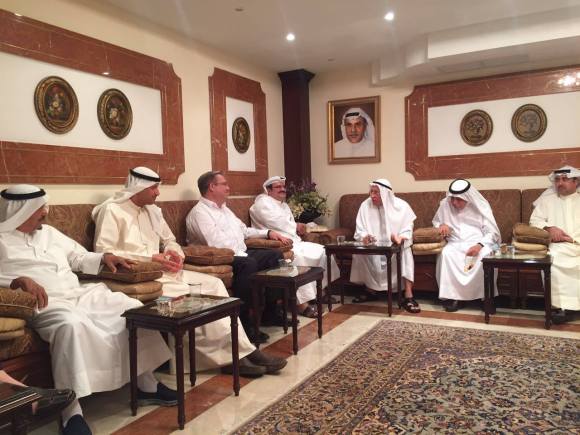
While working recently in Kuwait, I was privileged to be invited to a diwaniya (https://en.wikipedia.org/wiki/Dewaniya) along with colleagues from my project team.  This type of forum is fairly unique to Kuwait and it a key element of their civil society.

For around an hour we discussed industry policy with a number of leading lights from Kuwait’s business community.  I learned a lot from them.  The discussion took our project team beyond the numbers and statistics we were considering to just how the reforms might actually be implemented.  The exchanges were robust but expressed in good humour and with great politeness.

I think these kinds of gatherings are extremely important in shaping consensus.  Kuwait has hundreds of diwaniyas and candidates for public office often seek to turn up at as many as possible around election time.  In my view, it removes a lot of the adversarial nature that characterises public discourse in Western countries.  Where hard decisions are needed to effect significant change, a consensus based approach may deliver better outcomes than a crash or crash though approach.

Australia used to do evidence-based, consensus-driven public policy quite well.  It was grounded in clearly explaining the need for change.  I fear now that the people putting themselves forward for public office are increasingly driven more by populism and a startling touch of irrationality.

Categories
Economics Lytton Advisory Policy

The Rent Economy

Kuwait.jpg

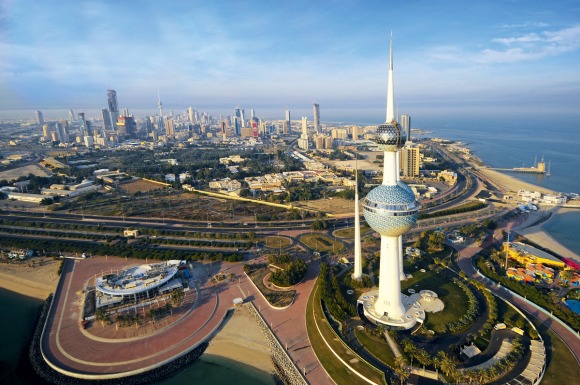
I am currently on assignment Kuwait, one of the oil drenched Gulf states. The economic incentives at play here are unlike anything I have ever seen. At university years ago we spent a couple of hours in undergraduate economics talking about rent seeking – looking for an economic gain without a reciprocal return to society through wealth creation.

Laid out before me is a whole economy resting on this premise and driven by the distribution of oil rents. Kuwait has been pumping around 3 million barrels of oil a day and is targeting 4 million  with some urgency now oil prices have collapsed. Currently this earns them an oil rent (after costs of production and depending on the price) around US$60 million a day. When oil prices were over US$100 a barrel they were getting US$300 million a day. Kuwait has one of the highest dependencies on oil – some 93% of its revenues come from oil rents.

Some indicative figures provide context. The population of Kuwait is about 3 1/2 million people.  Around one third of residents are Kuwaiti citizens, the vast majority of the remainder are guest workers. Guest workers remit around A$25 billion a year to their home countries. This is equivalent to 55% of the Kuwait national budget. Nine in ten Kuwaiti citizens are employed by the government. The country rests on a cash reserve of around US$600 billion.

All businesses, with a few limited exceptions, are required to be 51% owned by Kuwaitis. So there are a range of business partnerships that are not strictly commercial but compliance-based. At any stage, the dominant partner can take control of the business.

This creates some very peculiar incentives. Lack of permanency for guest workers provides little incentive to save, spend or invest in Kuwait. So Kuwait misses out on retaining a significant proportion of their remittances.

With significant reserves in the ground – over 75 years – there is little incentive to move away from this rent-seeking model and the inherent imbalances it introduces. However in the long term that transition will be necessary.

It will be fascinating to see how this plays out over time.


Categories
Lytton Advisory

The Mouse that Roars

mickey_mouse

In the heart of the Kingdom of the Mouse at EPCOT today.  Disney certainly has already created an immersive environment.  It is a fully enclosed micro economy.  The main point is that it is an opt-in environment.  A flick of a switch, a click of a mouse and the consumer can easily be somewhere else.  Disney is very shrewd with its franchises but they are only surface tales of eternal stories.  Their ability is to tell them to mass markets. Coincidentally The Economist had a piece on the Magic Kingdom, here.

Categories
Lytton Advisory

American Infrastructure

us-mapFew countries epitomise individualism and free markets as much as the United States. Large swathes of the economy are given over to commercial activity. The US is a global leader in investment, innovation and infrastructure systems. Also, a lot of infrastructure in the US has been privately developed, delivered and run over a long period of time.

Which is why it might be surprising that the last Report Card (2013) by the American Society for Civil Engineers so poor. One would have thought eagle eyed investors could create assets to address infrastructure needs. The engineers actually gave America a D+ and stated that by 2020 investment of some US$3.6 trillion is required. That is around US$11,250 for every man, woman and child. The next review is in 2017.

In contrast, the Institute of Engineers in Australia gave Australia a grade of C+ in 2010 on the back of a possible deficit in infrastructure spending of A$770 billion. That is around A$32,000 for every man, woman and child in Australia. It seems we need even more than our American cousins.

So who is doing better? It is hard to tell without know what assets each country already has.  I suspect the level of future investment is partly a function of increasing demand and the need to replace of existing assets. It will be good to get some first hand insights when I am in the US in December.

Categories
Lytton Advisory

Quarterly Newsletter – September 2015

Now available at: https://lyttonadvisory.com.au/media/

Categories
Local Government

Building our Regions

The Queensland Government has replaced the former government’s Royalties for Regions program with its own  200 million ‘Building our Regions’ Program and is calling for applications from local councils.  See:

http://www.statedevelopment.qld.gov.au/regional-development/building-our-regions.html

A commendable aspect is the requirement to provide a cost benefit analysis on applications for funding over $500,000.  Application for amounts below that will still be subject to a benefit analysis.

There are pros and cons with this type of handout – are projects genuinely additional, will co-contributions be effective, is effective, long term infrastructure planning distorted?

However, it can hardly be argued local councils are drowning in funds to invest in infrastructure.

Recognising the Government is looking for shovel-ready projects, applications close 11 September.

Categories
Economics

Let there be lights …

For all my friends and colleagues in the transport sector, this year we celebrate the centenary of the traffic light.  What a boon that has been to orderly traffic in our major cities across the world – as well as a reliable stream of work for town planners, traffic engineers and even economists!

When Was the First Traffic Light Installed? 5 Fast Facts You Need to Know

And, yes, we economists do measure the economic benefits of traffic lights.  Particularly when you consider installing them at 1,000 intersections:

Click to access traffic-signals.pdf

Of course the big issue is whether we should follow the Europeans and switch to flashing amber during off peak periods.

When we eventually move to three dimensional traffic environments, I wonder how this nodal regulator will evolve.

More importantly, will our legions of pedallists and perambulators prevail in the design of future urban transport systems and kill off King Car?

Or, with the rise of the machines will we simply see motoring evolve through driverless cars into pod platforms?

Either way, as we move into real time, big data clipped from traffic movements will we eventually see the demise of the humble traffic light?

Categories
Infrastructure

Improving Your Chances of Winning a Luxury Car

In helping people and organisations figure out the odds and make smarter infrastructure decisions, sometimes the right course of action may actually seem counterintuitive.

An example of this is the Monty Hall Paradox.

Suppose you are participating in a game show where the prize – say a luxury car – is behind one of three closed doors.  Can you improve your odds of winning the car by switching doors after the host shows you what is behind one of the other doors?

Of course you can.

I have attached a little PowerPoint that explains why and in what context.  See:

20150701-monty-hall-paradox-lytton-advisory

It can be hard to recognise when additional, relevant information should prompt us to change course.